

Aviator RTP Compared With Other Crash Games
A $100 total stake in Aviator carries a theoretical expected return of $97. The remaining $3 represents the game’s 3% house edge. That calculation is useful, but it does not mean every player receives $97 back after staking $100. It describes expected value across repeated play, not the result of one session.
Aviator’s 97% RTP sits above Spaceman’s 95.5%, matches the listed figures for Aviatrix and Aviamasters, and falls within JetX’s 96.2% to 98.9% range. Those percentages allow a direct mathematical comparison. They do not predict the next crash point, guarantee a cash-out or remove the high variance of a crash game.
Aviator’s 97% RTP
Aviator uses a 97% RTP and a 3% house edge. Spribe describes Aviator as a social multiplayer game with an increasing curve that can crash at any time.
The 97% figure applies to the game’s underlying expected value. For every $10 staked, the theoretical expected return is $9.70 and the expected loss is $0.30. At $1,000 in total stakes, those figures become $970 and $30. Actual short-term totals can be far above or below those amounts.
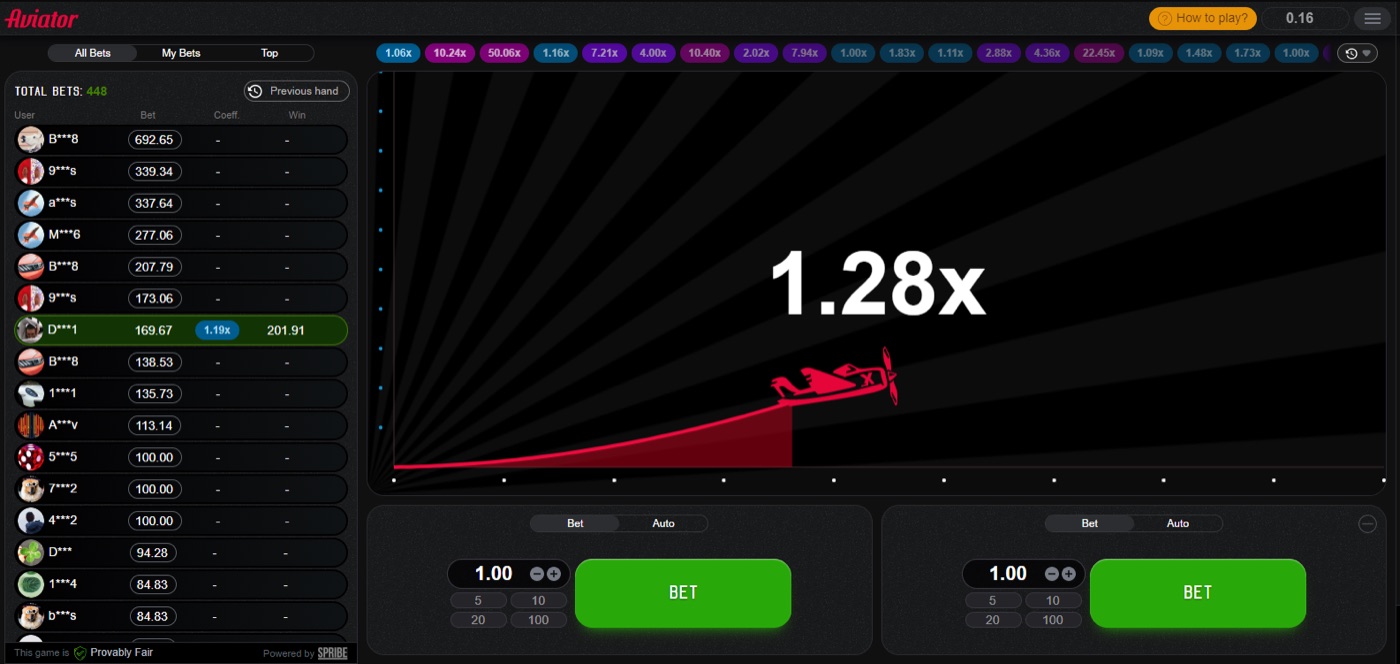
The rising Aviator curve can crash before a player completes a cash-out.
RTP and house edge express the same relationship from opposite sides. Aviator returns 97% in theoretical value and retains 3% as the mathematical edge. Together, they account for 100% of the amount staked.
- RTP: 97% of stakes in theoretical expected return.
- House edge: 3% of stakes in theoretical expected loss.
- Game type: a crash game or instant game, not a slot.
- Variance: high, because rounds can end at 1.00x or continue to much larger multipliers.
About 3% of Aviator rounds crash instantly at 1.00x. That is roughly one round in 33. A player who has not cashed out before such a crash loses the stake on that bet. Other rounds can reach higher multipliers, but their probability declines as the target rises.
Four RTP Comparisons
Spaceman lists a 95.5% RTP, while Aviator lists 97%. JetX lists an RTP range from 96.2% to 98.9%, so its exact figure depends on the operator.
| Crash game | Developer | RTP | Listed maximum multiplier |
|---|---|---|---|
| Aviator | Spribe | 97% | Not published by Spribe |
| JetX | SmartSoft | 96.2% to 98.9% | Not stated here |
| Spaceman | Pragmatic Play | 95.5% | Up to 5,000x |
| Aviatrix | Aviatrix | 97% | Up to 10,000x |
| Aviamasters | BGaming | 97% | Up to 250x |
Aviator has a 1.5 percentage-point RTP advantage over Spaceman. On $1,000 of total stakes, that difference represents $15 in theoretical expected return: $970 at 97% against $955 at 95.5%. It remains a long-run comparison rather than a promise about a particular $1,000 session.
JetX requires more care. At 96.2%, it sits 0.8 percentage points below Aviator. At 98.9%, it sits 1.9 percentage points above Aviator. A general statement that JetX always has a higher or lower RTP would therefore be wrong. The JetX figure depends on the operator.
- Aviatrix matches Aviator at 97% RTP.
- Aviamasters matches Aviator at 97% RTP.
- Spaceman is lower than Aviator at 95.5% RTP.
- JetX can be lower or higher than Aviator within its 96.2% to 98.9% range.
The maximum multiplier is a separate figure. Aviatrix lists up to 10,000x, Spaceman up to 5,000x and Aviamasters up to 250x. Spribe does not publish an Aviator maximum multiplier. A larger listed maximum does not, by itself, establish a higher RTP.
What RTP Measures
Aviator assigns an expected loss of 3% of the stake at every cash-out target. A 2x target changes the distribution of wins and losses, but it does not change that 3% edge.
Consider 100 bets of $1 with a 2x cash-out target. Aviator reaches 2x with a probability of 48.5%, so the expected calculation is 48.5 successful $2 returns from $100 staked. That produces $97 in expected returns and a $3 expected loss.
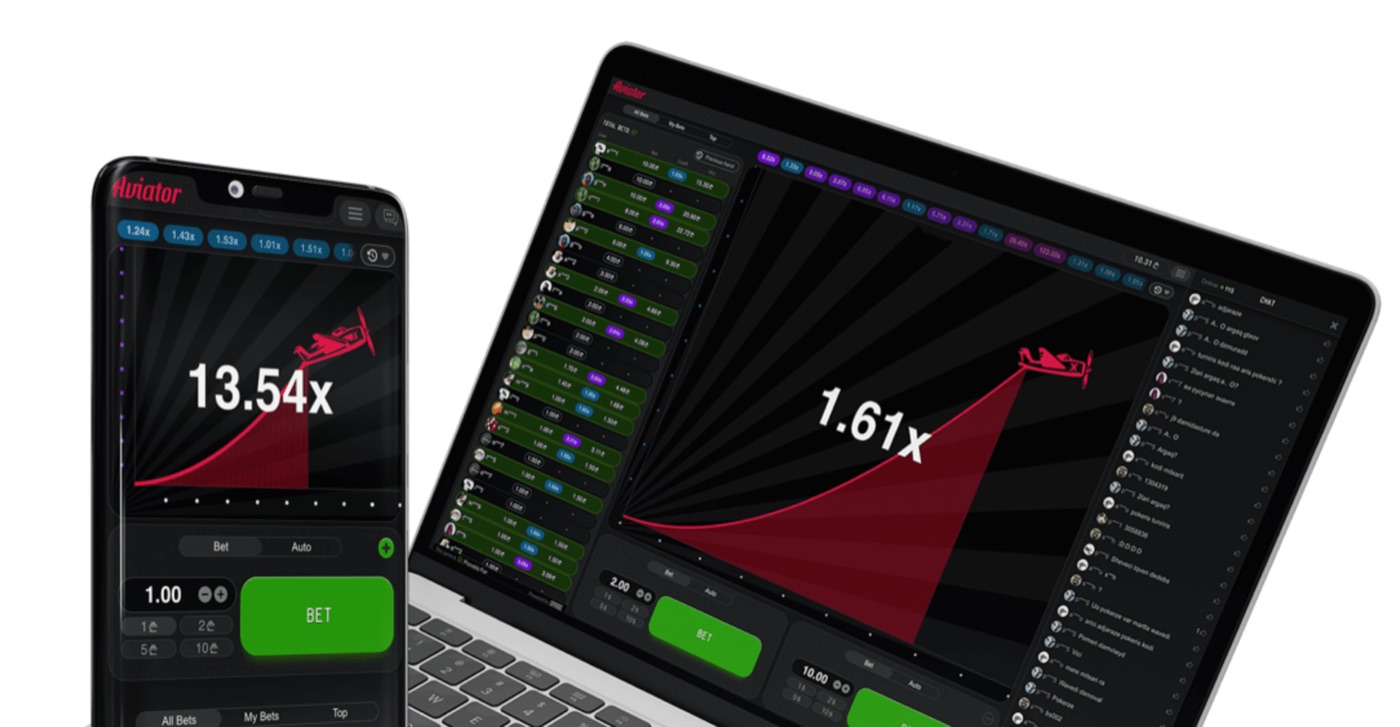
Aviator displays different completed multipliers, while its stated RTP remains 97%.
The same calculation works at 10x. The round reaches 10x with a probability of 9.7%. Across 100 theoretical $1 bets, 9.7 successful returns at $10 each equal $97. Wins happen less often, but each successful cash-out pays at a higher multiplier.
- RTP measures theoretical expected return from the money staked.
- RTP permits comparisons between games and between available JetX configurations.
- RTP does not specify what one player will win or lose in a short session.
- RTP does not state when a high multiplier will appear.
- RTP does not turn an automatic cash-out setting into a profitable system.
Session length also changes exposure, not the edge. Aviator rounds last about 8 to 30 seconds, with roughly 60 to 90 rounds per hour. More bets create more total stake. If a player makes 90 separate $1 bets, the total amount staked is $90 even when the same starting balance is reused after earlier returns.
Multiplier Odds And Returns
Aviator reaches a multiplier m with probability 0.97 divided by m. The formula gives a 48.5% probability of reaching 2x and a 9.7% probability of reaching 10x.
| Cash-out target | Probability round reaches target | Expected return on a $10 stake |
|---|---|---|
| 1.2x | 80.8% | $9.70 |
| 1.5x | 64.7% | $9.70 |
| 2x | 48.5% | $9.70 |
| 3x | 32.3% | $9.70 |
| 5x | 19.4% | $9.70 |
| 10x | 9.7% | $9.70 |
| 20x | 4.85% | $9.70 |
| 50x | 1.94% | $9.70 |
| 100x | 0.97% | $9.70 |
The expected return remains $9.70 because the probability falls in proportion to the multiplier. At 5x, a $10 winning bet returns $50, but the round reaches that target only 19.4% of the time. At 100x, the winning return is $1,000, while the probability falls to 0.97%.
A player searching for sportpesa app aviator still faces the same crash-game question: can the cash-out request reach the server before the multiplier stops?
- Lower targets produce more frequent successful cash-outs and smaller returns per success.
- Higher targets produce less frequent successful cash-outs and larger returns per success.
- Every listed target retains the same negative expected value of 3% of the stake.
- No target predicts the result of the next independent round.
These figures also show why a run of losses is possible without changing the RTP. A 2x target fails in 51.5% of rounds. A 10x target fails in 90.3%. The next round does not compensate for the previous result.
Targets Change Variance
A 1.5x Aviator target succeeds in about 64.7% of rounds. A 50x target succeeds in about 1.94% of rounds.
The first target creates more frequent returns, while the second creates long stretches without a successful cash-out. Both retain a theoretical expected loss of 3% per stake. Strategy changes variance, not the edge.

An operator lobby provides access to Aviator but does not change what 97% RTP promises.
Aviator provides two bet panels with separate cash-outs. A player can set one bet to cash out at 1.5x or 2x and leave another for a target such as 5x or 10x. Splitting the stakes changes the pattern of possible returns. It does not produce an RTP above 97%.
- Auto Cash-Out submits a cash-out at a preset multiplier.
- Auto Bet or Auto Play can cover 10 to 100 rounds.
- Stop-on-win and stop-on-loss settings can limit an automated sequence.
- Two bet panels allow separate stakes and targets in the same round.
Martingale does not change the calculation either. It doubles the stake after each loss and reaches 1,024 times the base stake after 10 losses. Fibonacci and D’Alembert also alter stake progression without beating the 3% edge.
- Choose a total amount that can be lost.
- Keep each round’s stake at no more than 2% of the bankroll.
- Set loss and win limits before starting.
- Use demo mode to observe the round and cash-out process without registration.
Gamble only with money you can afford to lose. A limit controls spending; it does not improve the multiplier probabilities.
RTP And Fair Results
Spribe publishes a SHA-256 hash of the server seed before each Aviator round. The game combines that server seed with player client seeds and fixes the crash point before take-off.
The inputs become available after the round and can be checked with the verification tool inside Aviator. Neither Spribe nor the operator can change the result after the round starts.
Provable fairness and RTP answer different questions. The hash process lets a player check that a completed crash point followed the committed inputs. The 97% RTP describes expected mathematical return. A valid hash does not promise a win, and a 97% RTP does not reveal the next result.
- The pre-round hash commits the server to information used for the result.
- Client seeds contribute to the calculation.
- The post-round reveal allows verification inside the game.
- Independent rounds prevent earlier multipliers from predicting later ones.
Graph patterns, a supposed best time to play and strategy charts do not change the odds. Predictor apps and signal bots cannot know the crash point because it is committed by hash before the round. Playing at an off-peak time may provide a smoother connection, but it does not produce better multipliers.
A cash-out can still time out when latency or a slow device delays the request. The request must reach the server before the crash. That technical requirement is separate from RTP: the theoretical percentage does not guarantee that every attempted cash-out arrives in time.
Aviator FAQ
Aviator has a 97% RTP and a 3% house edge. JetX, Spaceman, Aviatrix and Aviamasters provide comparison figures from 95.5% to 98.9%.
Is Aviator’s RTP higher than JetX?
It depends on the operator. JetX has an RTP range of 96.2% to 98.9%. Aviator’s 97% is higher than a 96.2% JetX configuration but lower than a 98.9% configuration.
Does 97% RTP mean I get $97 back?
No. It means $100 in stakes has a theoretical expected return of $97 and an expected loss of $3 across repeated play. One player can receive more or less than $97, including losing the full amount.
Which comparison games also have 97% RTP?
Aviatrix and Aviamasters both list 97% RTP, matching Aviator. Spaceman lists 95.5%. JetX varies from 96.2% to 98.9%, depending on the operator.
Does a lower cash-out target improve RTP?
No. A lower target raises the probability of reaching the chosen multiplier, but it reduces the return when successful. Aviator’s expected loss remains 3% of the stake at every cash-out target.
Can a predictor identify the next crash?
No. The crash point is fixed before take-off through the provably fair process. Previous multipliers, graph analysis, calculators, predictor apps and signal bots cannot reveal the next independent result.
Why can an Aviator cash-out time out?
The cash-out request must reach the server before the crash. Latency or a slow device can delay that request. A timed-out cash-out does not change the stated 97% RTP or provide evidence about the next multiplier.